Weed Control
Weed Control is an Important Aspect of Rural Life
The RM of Wheatlands No. 163 assists its farmers and landowners with the eradication and control of designated Prohibited and Noxious weeds.
The RM’s appointed Weed Inspector will aid the landowner in devising a plan to eradicate or control prohibited and noxious weeds.
DID YOU KNOW? If you buy “approved” herbicide (at any retailer) and spray noxious or prohibited weeds, you can submit the receipt and application form to the RM to receive half the herbicide cost back through the SARM IPCP program?
To view a list of accepted herbicide options for selected regulated weeds, click here.
A “Herbicide Application Record” form must be completed for each treatment. And a “Claim Form” for each Prohibited or Noxious weed must also be completed. The “Herbicide Application Record” and “Claim Form” must be submitted to the RM’s administration, along with the pre-approved herbicide invoices by October 15th of each year. The RM will then compile all forms and records and submit them to SARM for the IPCP rebate.
You can find the designated Prohibited and Noxious weeds as well as the pre-approved herbicides in Appendix A of the IPCP Guidelines.

For more information about the SARM IPCP program or weed control, contact our office or:
Joanne Kwasnicki PAg
Plant Health Technical Advisor – SARM Division 2
[email protected] or (306)-541-8437
The appointed Weed Inspector for the RM of Wheatlands is: [email protected] or (877) 875-1210

The RM of Wheatlands has put together the following Weed Management Plan to help control invasive weeds in the problem areas of the RM:
The proper cultivation of land and control of noxious weeds is encouraged throughout the municipality. If a noxious weed is spreading due to neglect, RM Council may take action against the land owner under the provisions of the Noxious Weeds Act.
A few weeds to be on the look out for are:
Leafy spurge, not only does this invasive alien plant expand to overtake nearby areas; the milky liquid from its stems and flowers is an irritant to most livestock and may cause severe skin rashes or irritation in humans. As its greenish-yellow flowers in umbrella clusters dry, they explode and eject seeds up to five meters (six yards), spreading seeds that can remain dormant in soil for up to eight years.

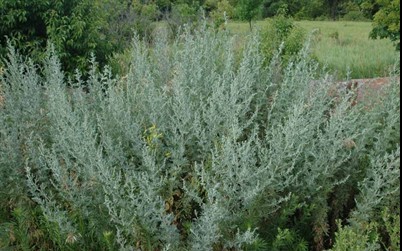
Absinth wormwood will outcompete desirable forbs and grasses in pastures, fields and native grasslands. It easily establishes in disturbed areas where there is little plant competition. Absinth wormwood is an herbaceous perennial with a strong sage odor. It commonly grows to 3 feet tall (sometimes to 5 feet tall). Plant is covered with fine, silky hairs and has a gray-green appearance.
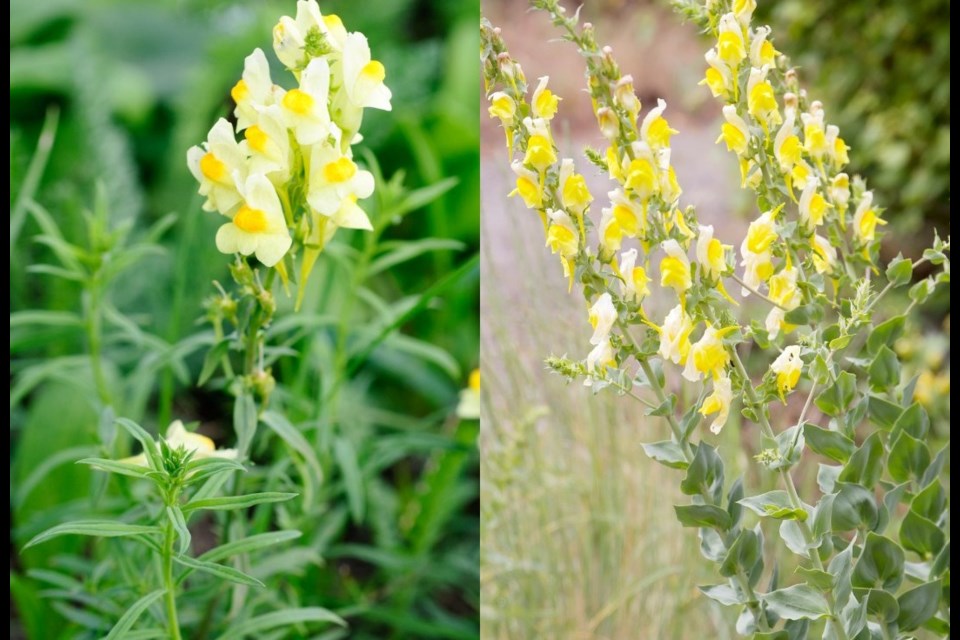
Yellow toadflax (Common toadflax, Butter-and-eggs) spreads by a creeping root system. Yellow toadflax can out-compete native plants, which negatively affects plant crops, and reduces grass growing in pastures and rangelands. Yellow toadflax grows up to 80 cm in height by a creeping root system. Flowers are light yellow with an orange spot on its lower lip, like a snapdragon. It has long, slim, light green leaves.
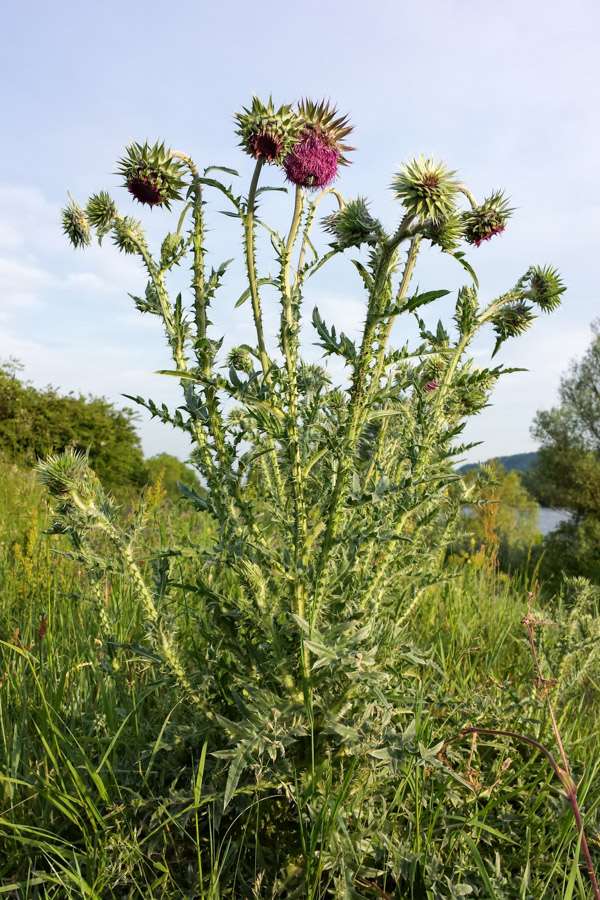
Bull thistle is a tall, spiky plant that can grow up to six feet tall and thrives in disturbed areas like pastures, roadsides, and overgrazed fields. The first year it produces a rosette that is deeply lobed, hairy, spiky, and dark green. The second year it bolts and produces flowers and can grow up to 2 m tall. The flower is pink-purple, gumdrop shaped, and grows at the end of each stem. Flowers are 4 to 5 cm wide and surrounded by spines. The leaves are deeply lobed with spines and covered in fine hairs. Livestock do not eat it, which gives it a competitive advantage.
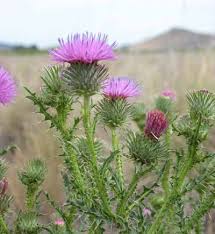
Similar to bull thistle, nodding thistle is found primarily in pastures and waste places, and along roadsides. It is rarely found in cultivated crops. Generally, nodding thistle flowers from June to October. Each plant has numerous bright purple flower heads that can range from 3–5 cm in diameter. Flowers will “nod” to one side. Steams are hairy with sharp spines.